April 7, 2022

    5 Ways to Use Preview, Production and Sandbox Environments in D365 BC

    Microsoft is constantly updating and enhancing their software to give administrators the best tools possible. This includes the Dynamics 365 Business Central Admin Center.

    A critical aspect of the Admin Center is how administrators can get to know new features in sandbox environments before an update goes live. It is also where they should manage production environments.

    Here are the most important Dynamics 365 Business Central features to leverage to gain peace of mind around the impact of changes on your organization, and how to utilize them. 

    1. Changing Your Environment  

    Business Central’s Admin Center allows you to prepare for new updates or functions by using sandbox environments.

    Sandbox environments give users a chance to familiarize themselves with new features — before they’re required to use them. Administrators can also manage production environments through the Admin Center.

    From a Sandbox Environment to Production 

    After you’ve tested your sandbox, you can turn it into a production environment.   

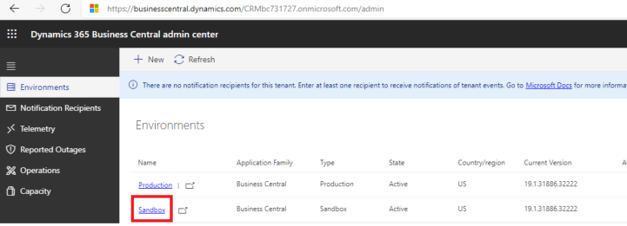
    1. Click on a Sandbox environment.       BC-Sandbox1
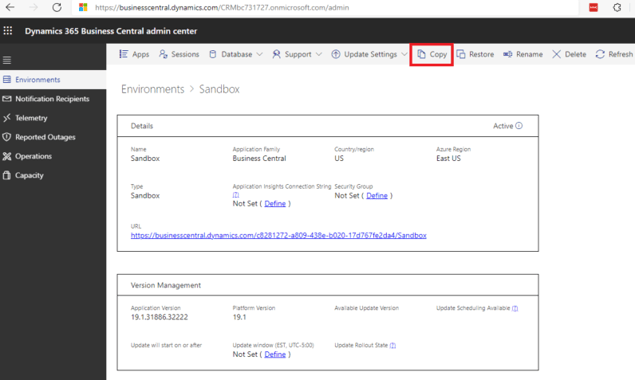
    2. Click on Copy action.                         BC-Sandbox2                 
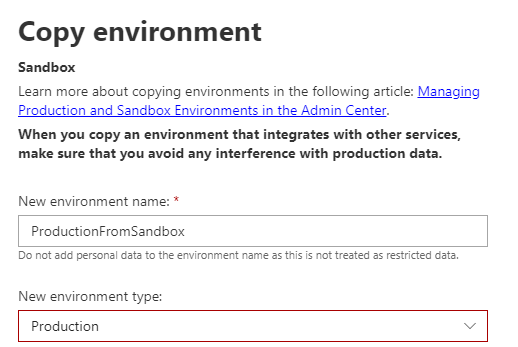
    3. A new dialog appears.                                                 BC-CopyEnvironment1            
    4. Enter the New environment name and the type of the environment, in this case Production, and then click on Copy.                                                                                       BC-CopyEnvironment2                                                                                     
    Reverting From a Production Environment Back to Sandbox 

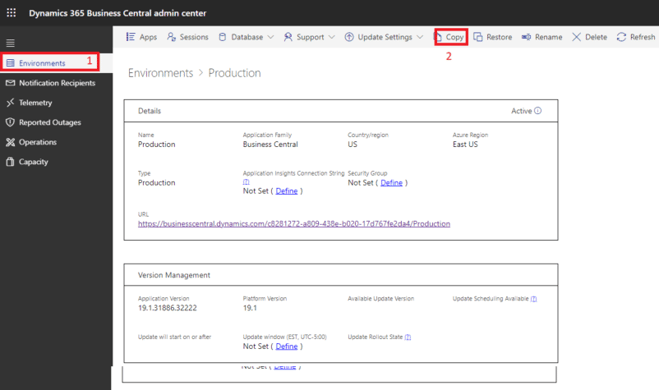
    1. Navigate to environment home page and click on a Production environment.BC-Production_to-Sandbox1 
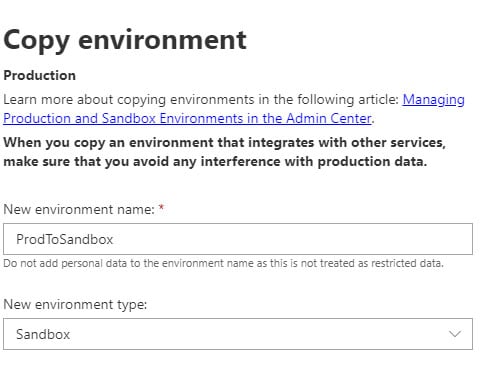
    2. In the next screen, pick a name for the new sandbox and click on Copy.copy env 1 copy env 2
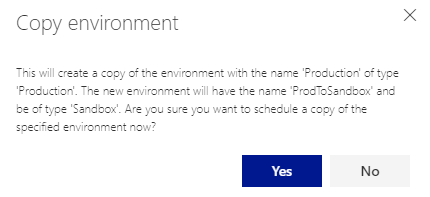
    3. Confirm operation.                                                                          BC-Production_to-Sandbox3 
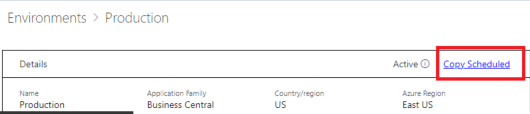
    4. Copying is scheduled.                                                 BC-Production_to-Sandbox4
    5. And copying occurs.                                                    BC-Production_to-Sandbox5
    • Note 1: You can also perform the two actions programmatically via APIs.
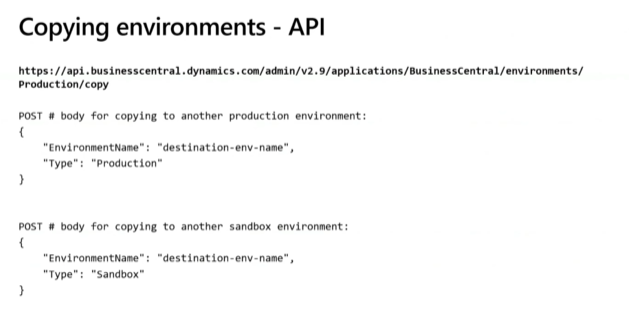
      BC-Production_to-Sandbox6 
    • Note 2: Clean up or prepare data via two new events.
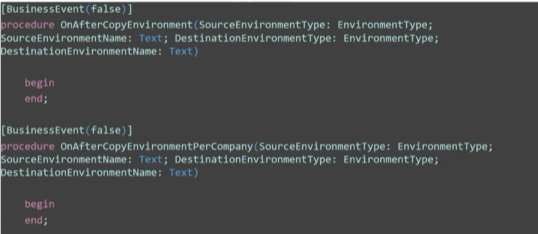
      BC-Production_to-Sandbox7

    2. Restricting Access to a Specific Environment for Certain Users (Part of a Security Group) 

    1. Create a Security Group in Azure AD or Microsoft 365 Admin Center.
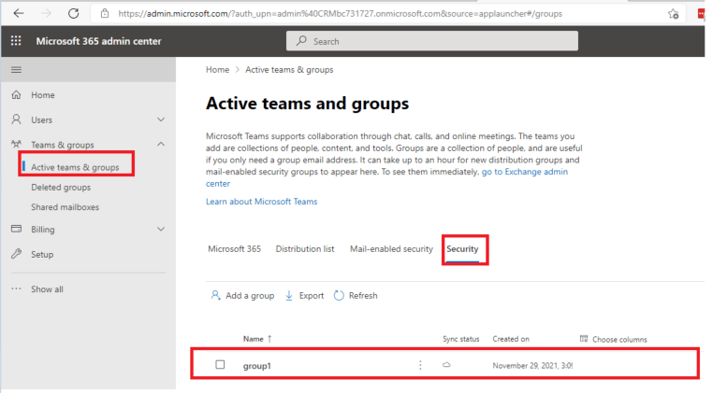
       BC-CreateSecurityGroup
      • Open Admin Center  
      • Navigate to Active Teams and Groups  
      • Click Security  
      • Select Add a Group  
      • Add owner(s) and member(s)
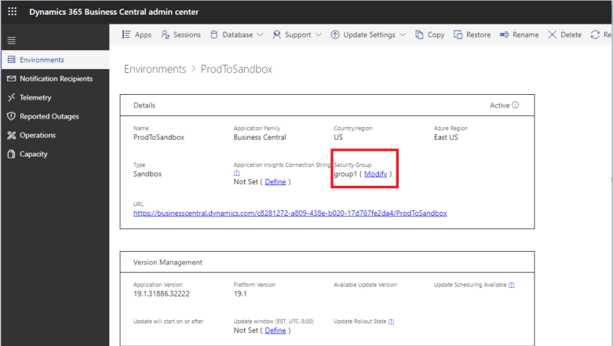
    2. Assign a security group to the Business Central environment. 
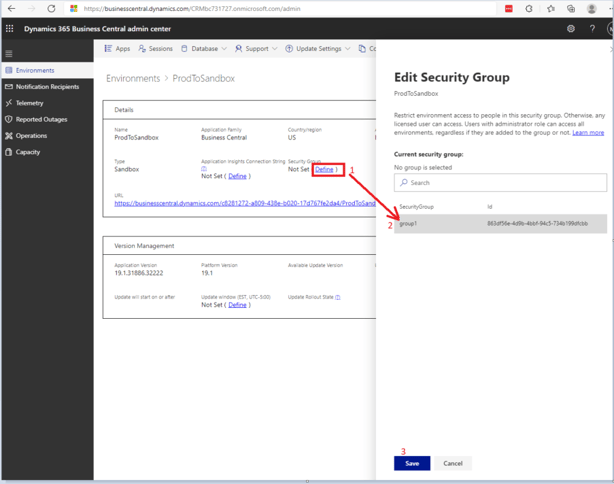
      BC-Assign_SecurityGroupBC-Assign_SecurityGroup2

    Admin users will be allowed in these environments. To restrict access to an environment, create a security group with zero members, limiting access to admins only.

    3. Environment Operations are Now Caught in the Environment Operations 

    Navigate to operations.       
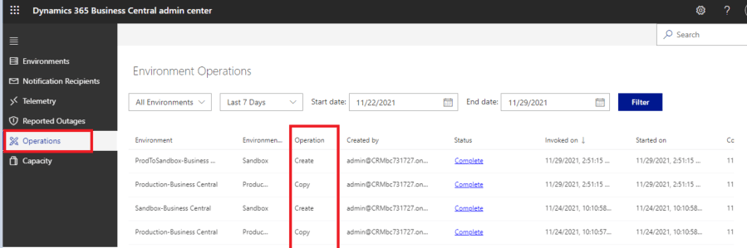
     BC-Navigate_to-Operations

    4. Restart Environments  

    Navigate to operations.   

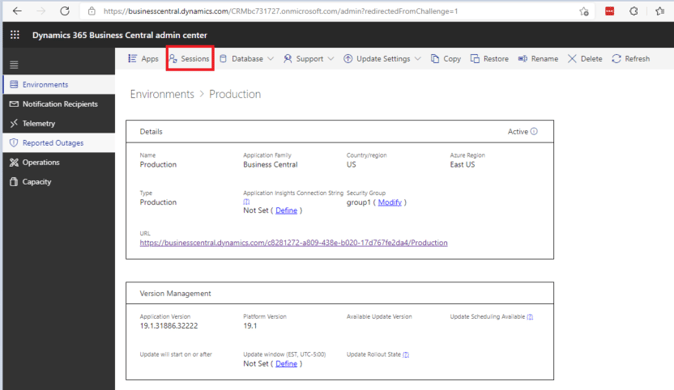
    1. Open the environment.  
    2. Click on Sessions.  
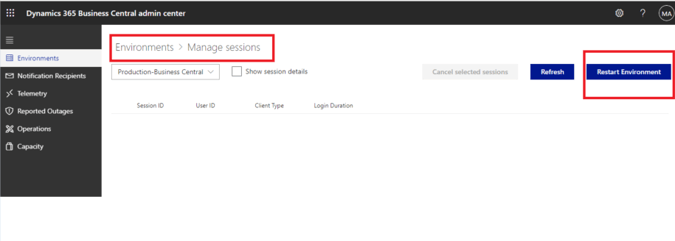
    3. Click on Restart Environment.  

    BC-Restart_Environment1BC-Restart_Environment2

    5. Update Apps in Each Environment  

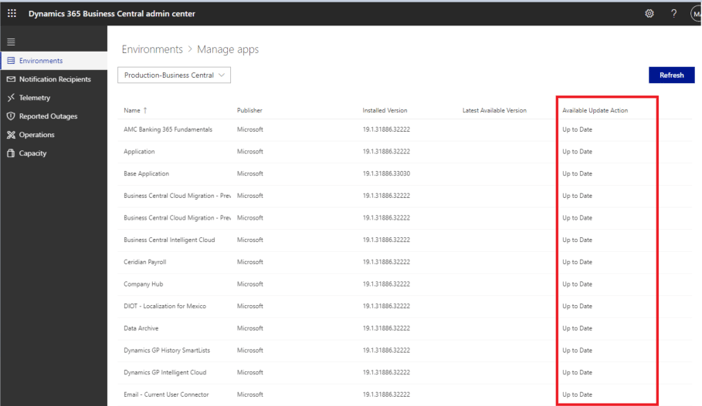
    If you have apps installed in your environments and they have updates in AppSource, you can manage the apps and their upgrades from Admin Center, starting with BC 2021 wave 2.  

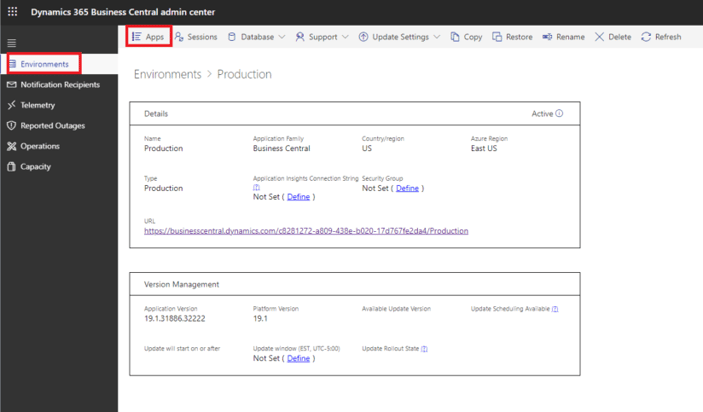
    1. Click on the Environments link.  
    2. Choose Apps.  

    BC-UpdateApps1BC-UpdateApps2

    If the Available Update shows “Action Required,” click on it and go through the upgrade flow.  

    Reach out to one of our Business Central experts to learn more about how to streamline your processes, and make informed decisions with the comprehensive business management solution specifically designed for small to midsized businesses. 

    Silviu Virlan

    Silviu Virlan is a Technical Solution Architect in the Customer Care team at Enavate. Silviu's focus is to ease clients’ experience on their digital journey, by leveraging Dynamics 365 Business Central’s new features on client installations, concomitant with building integrations with third-party systems, legacy code refactoring, optimization of existing modules and new feature design. His journey in the world of Microsoft Dynamics started in 2014, and he’s worked for Gold and Silver Partners in both Canada and the U.S. Outside of work, Silviu writes about various Business Central topics on his blog: www.svirlan.com as well as on community.dynamics.com. Blogging is important to Silviu for a few reasons: one needs to learn about what’s new in Microsoft so he can teach others and, equally important, to share knowledge at all levels. On weekends he enjoys biking, fishing and listening to audiobooks in warm and breezy Vero Beach, Florida.

    Enavate Recent Posts

    May 28, 2026

    3 Steps to Select the Right ERP System for Your Organization

    ERP is the software that you use to manage your business, integrating applications that manage and integrate your financials, supply chain, operations, reporting,... Read More
    May 27, 2026

    What Happens During a GP to Business Central Migration, Week by Week?

    GP to BC Migration Timeline: The Bottom Line A Dynamics GP to Business Central migration typically takes 12 weeks across four phases: Initiate, Build, Deploy, and Support.... Read More
    May 13, 2026

    Dynamics GP vs. Business Central: What Really Changes in Finance?

    For many Dynamics GP users, the biggest question when considering a move to Business Central is simple: Read More

    Subscribe to Receive Email Updates